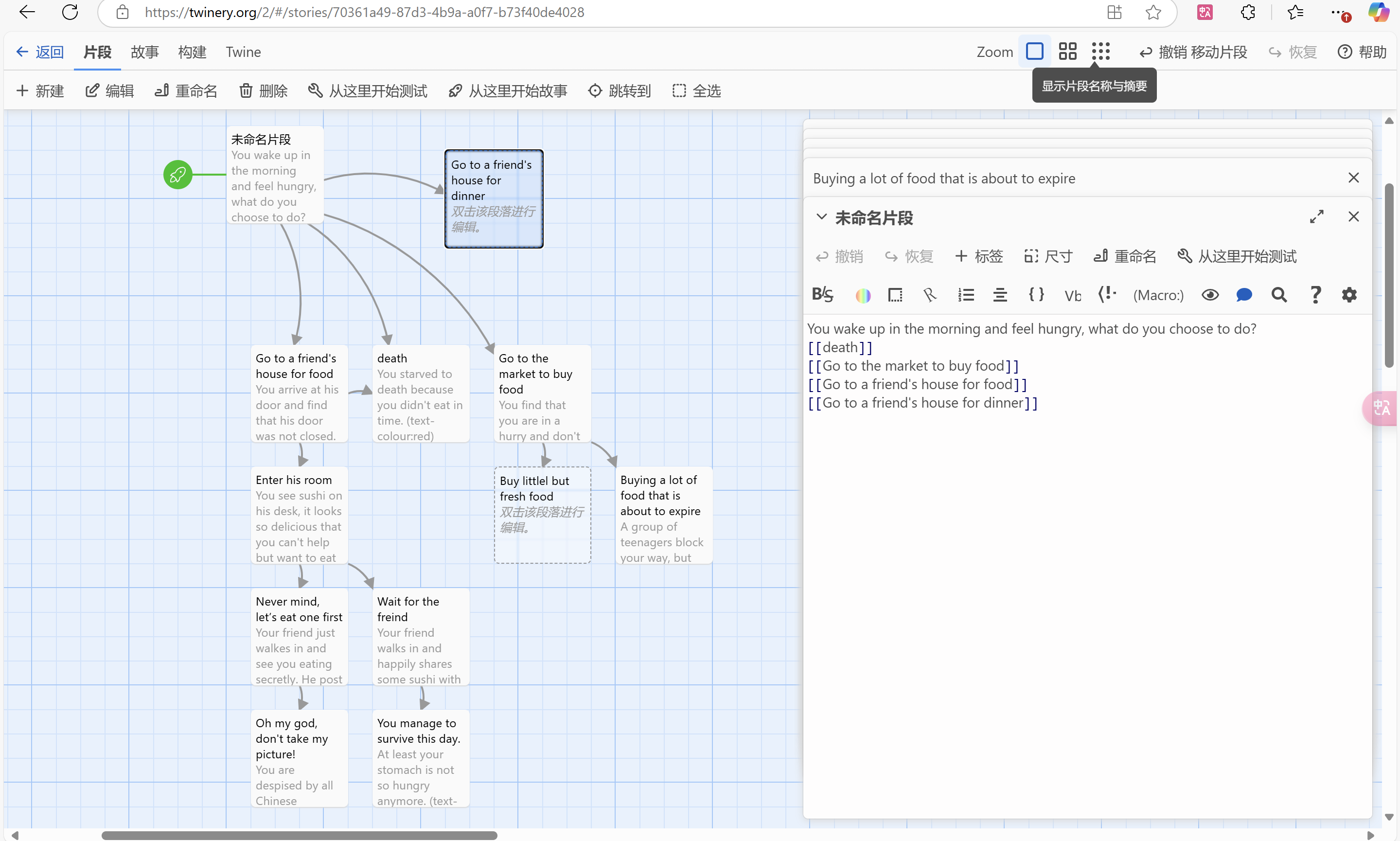
Week 1 Introducing Digital Practices


The first week lecture briefly introduced the definition of digital media and outlined the modules.
Week 2 Creating Websites
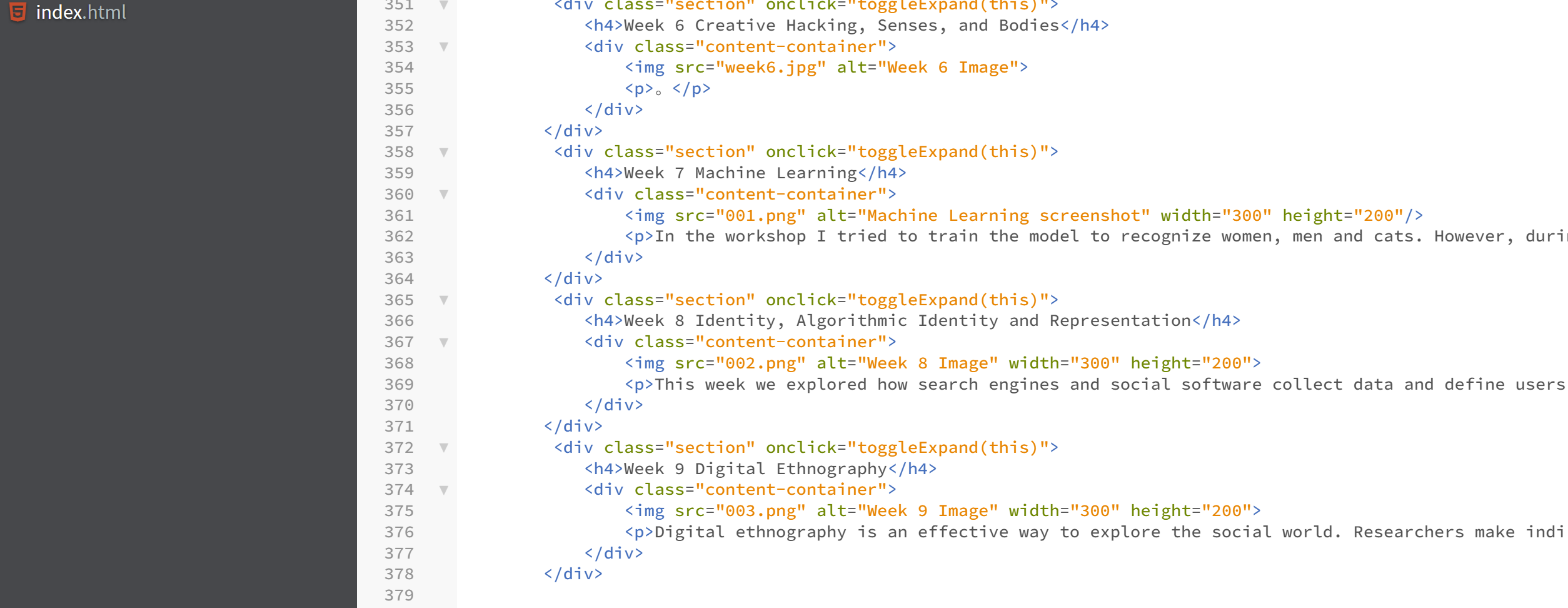
I learnt the basics of HTML and CSS and started trying to build my own website. Although Holly provides some resources for web case sources, I realise that web building can be complicated for beginners.
Week 3 Web Scraping
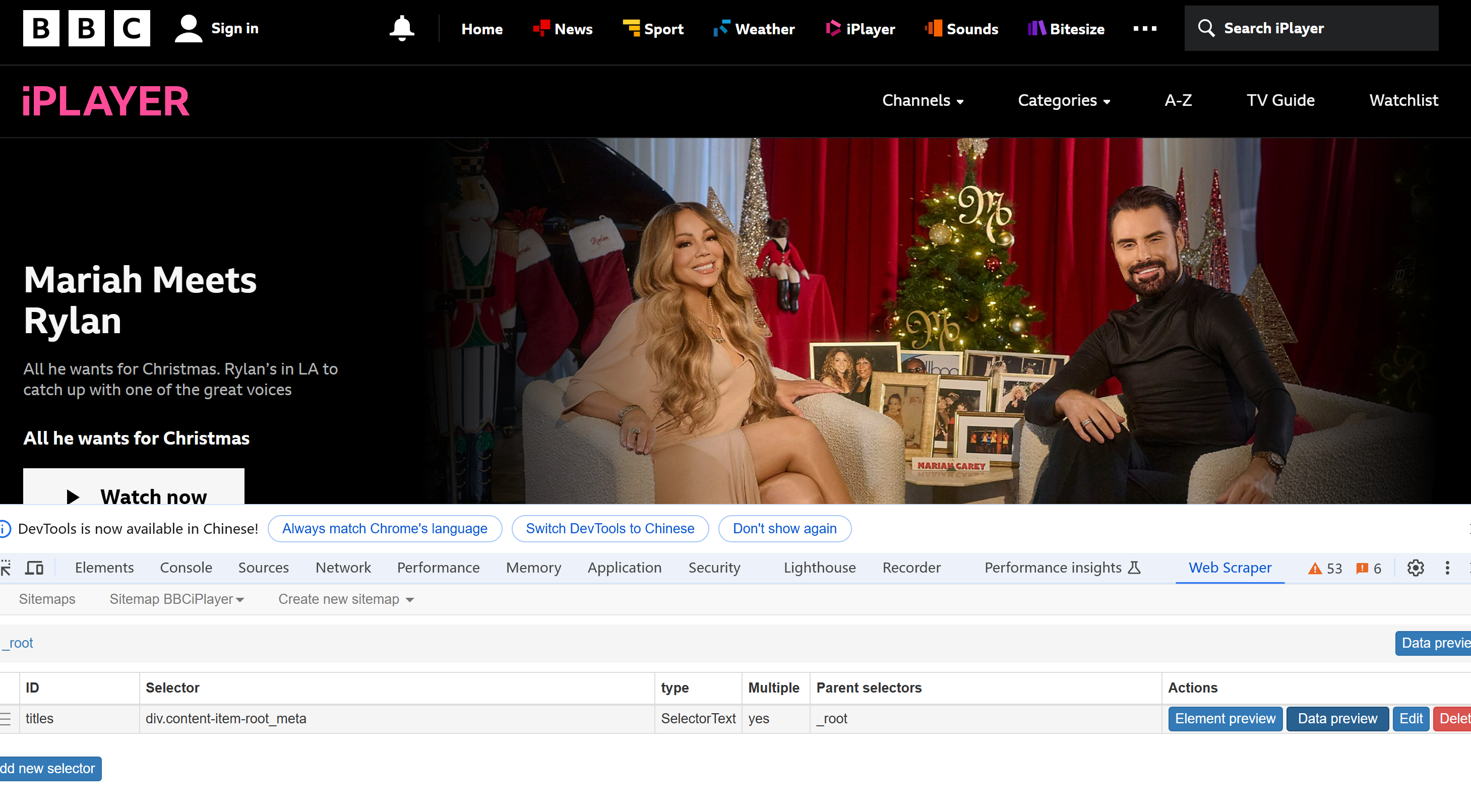
I knew about some scraping tools and learnt how to use them. Web scraping is helpful for efficiently scraping large amounts of web information. Digital media became less of a mystery to me this week because of the websites that I often use were shown as data.
Week 4 Data & Data Analysis
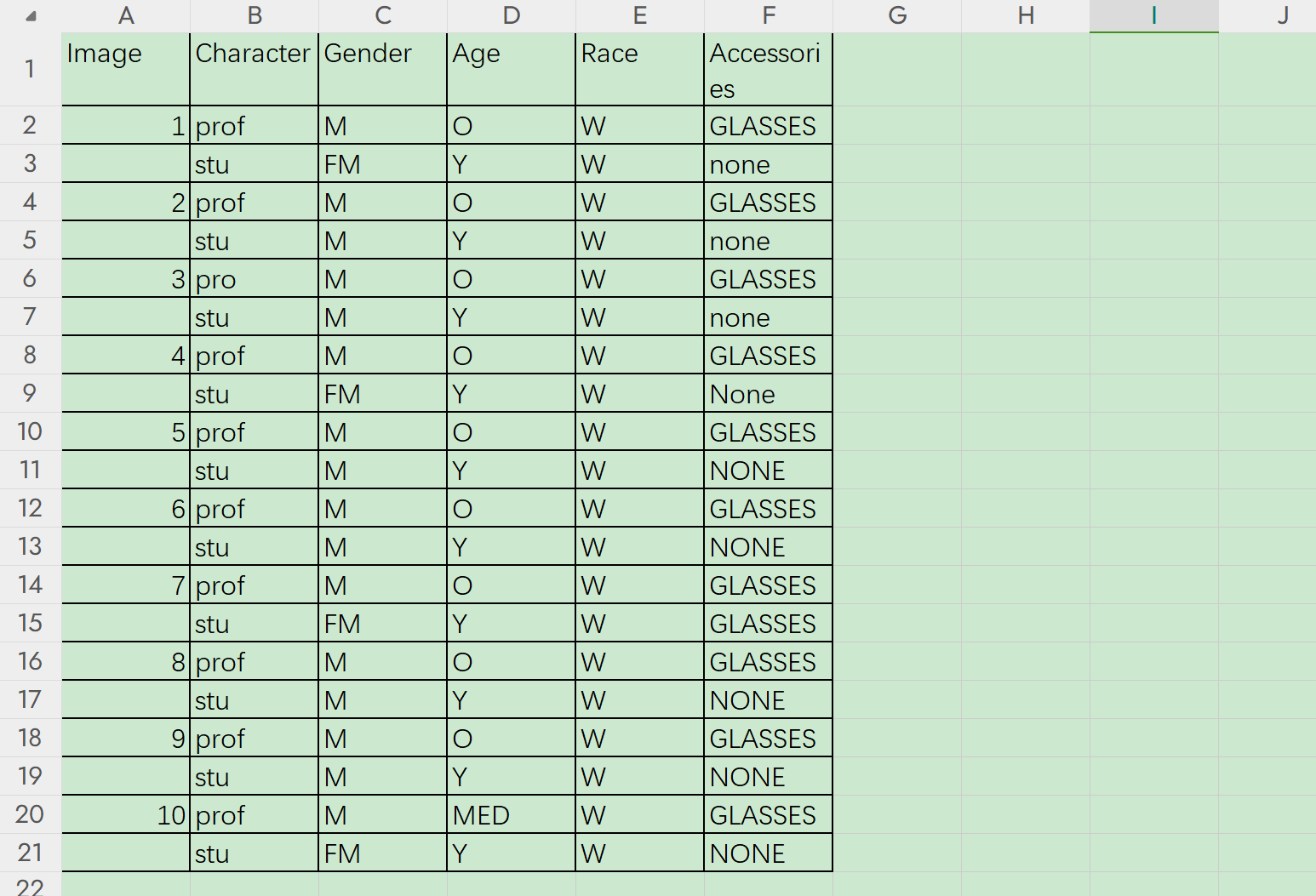
Our group decided to use chatgpt to collect image data by repeatedly asking it to generate a scene of a professor and student talking. We visualized the picture and made a table with five variables. Since our task does not directly involve real humans, the ethical risk does not seem to exist. The results of the image analysis, however, hint at a potential bias in the database Chatgpt used to train the machine. In learning and practicing this week's digital method, I was particularly mindful of the ethical issues of treating humans as data.
Week 5 Data Visualisation

This week we learnt how to process large amounts of data in Excel and visualize it. Learning how to use Excel and Tableau will help me present data to audiences efficiently. The visualisation needs to be done in a way that tries to help the audience understand the data intuitively. In addition, I was impressed that Holly presented some examples of creative visualizations, which inspired me to connect data visualization with visual art.
Week 6 Creative Hacking, Senses, and Bodies

I learnt the concept of Hacking Feminism from Required Reading. The author makes metaphors about the female body. Women can break through technology, rules and patriarchy just as hackers did with computers and information technology. I am very encouraged by the fact that the goal of hacker feminism is to modify some parts to our own satisfaction.
Week 7 Machine Learning
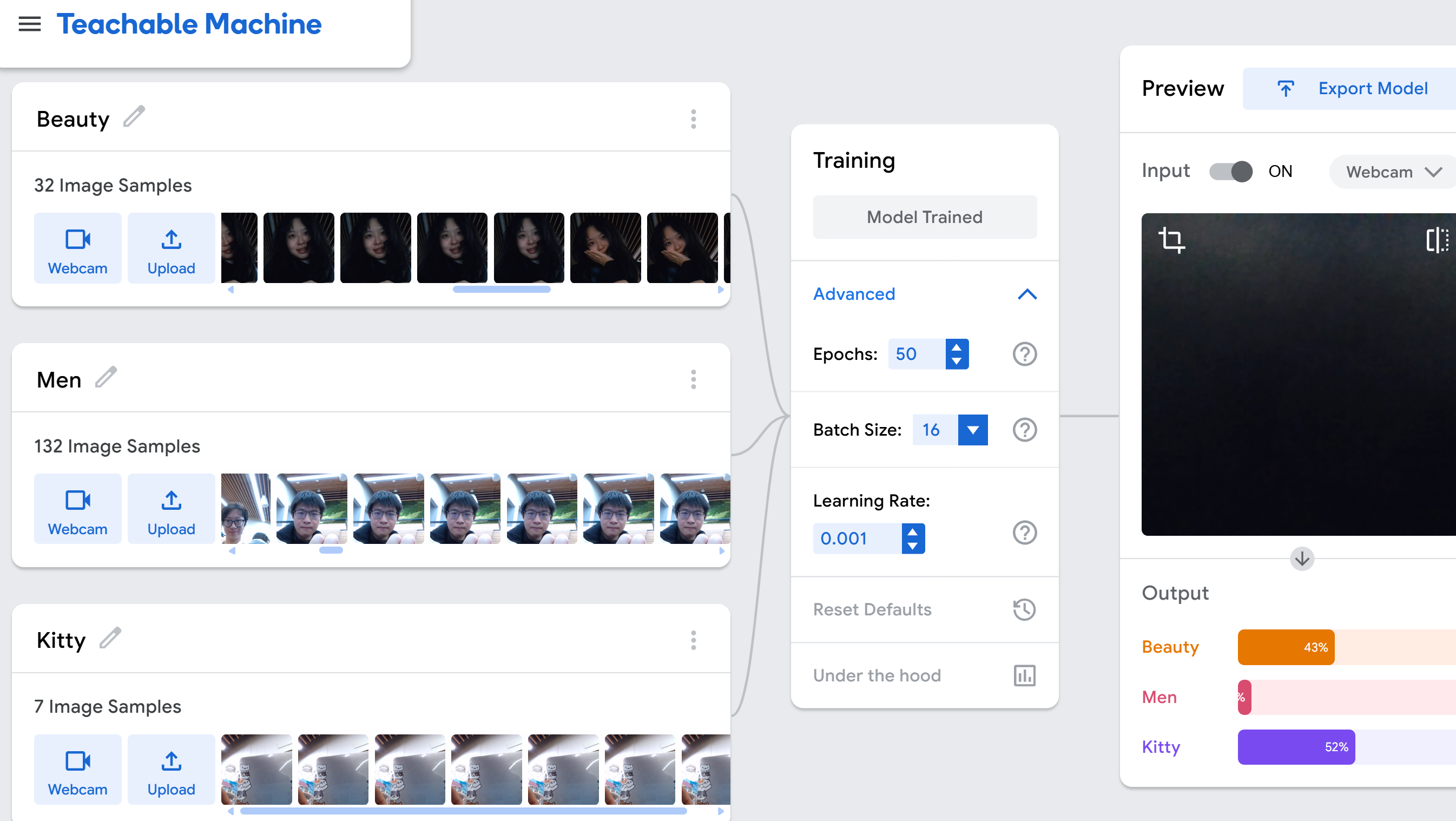
In the workshop I tried to train the model to recognize women, men and cats. However, during the process, it was found that there was a large error rate in identifying women and men. Despite the continued increase in the sample, the gender is still not fully distinguishable. The problem may be that the model is learning to focus on only certain features, such as long hair and narrow faces. For example, a female classmate who wears a hat is identified as male. When she was entered into the model training database, the male wearing the hat was also identified as female. If I had more time and resources, I would look for more samples. A large amount of samples is significant for machine learning. The smaller the sample size, the more the stereotype manifests itself in the recognition process.
Week 8 Identity, Algorithmic Identity and Representation

This week we explored how search engines and social software collect data and define users' algorithmic identities. I collected and categorized the last 15 posts from 32 friends on instagram. In this process, I feel that the algorithm may be biased in the process of collecting data, just like I can only classify photos by some photo features. In addition, the discomfort of spying on friends made me think about the intrusion of algorithmic identity on personal privacy.Sumper's approach has limitations. In the process of researching my friends' online identities, I found that categories are not enough. In addition, a post can only be classified into one type is somewhat unreasonable, because the content may contain several aspects of information.
Week 9 Digital Ethnography

Digital ethnography is an effective way to explore the social world. Researchers make indirect contact with people through data, which may be the innovation of traditional ethnographic research methods to adapt to the era of digital media. In practice, I have found that once I understand the digital community to which my research subjects belong, it is quite easy to find the digital community on the Internet and learn about this group of people in it. Digital communities have lower entry regulation than real communities.